

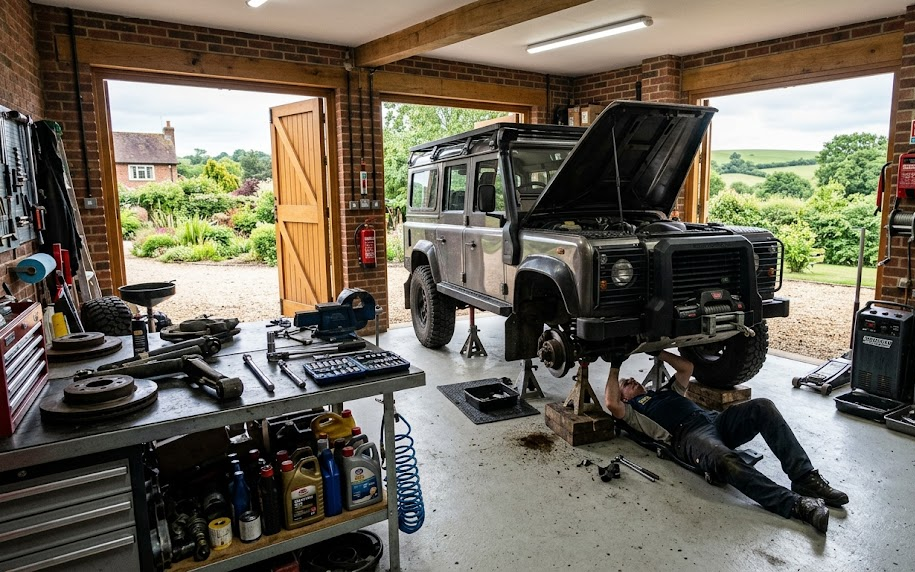
Trying to work under a heavy two-tonne Land Rover using a jack meant for a small car is very dangerous. Most home garages aren’t equipped to handle big repairs, such as taking out a gear system or changing a wheel axle, on a vehicle that’s as heavy as a small trailer.
According to the Health and Safety Executive (HSE), about 20% of accidents involving vehicles falling from jacks or poorly supported lifts are a major cause of deaths and serious injuries in UK workshops. Heavy 4×4 maintenance involves working with large, high-risk parts that require careful preparation. Organising and equipping your workspace before you start fixing your vehicle helps keep you safe, protects your vehicle, and saves you time.
At Auto Desk Catalogue, we specialise in offering high-quality car parts and accessories for a diverse range of vehicles.
Why Standard Garages Fall Short
Most home garages were built to fit a family car and a lawnmower, not specialised equipment like a chassis jig or a stripped transfer case. The ceiling height might also be too low to stand up straight while working under a car on a creeper, and the concrete floor wasn’t designed to handle the stress of repeated car-jacking. Addressing these two problems first will ensure that any other upgrades you make won’t be a waste of money.
Key Methods to Prepare a Home Garage
Here are some key methods to prepare a home garage for heavy 4×4 maintenance:
1. Check Your Floor Before Anything Else
Check the floor for small cracks, especially in the middle where you’d put a jack. A 2026 Concrete Calculate report found that typical UK garage floors should be at least 100mm thick. However, for heavy vehicles over 2.5 tonnes, you’ll need a thicker C30/37 grade concrete slab to safely sustain the localised pressure of heavy-duty bottle jacks. If your floor is too thin or already has cracks, just get it properly assessed before undertaking a major lift.
2. Claim Back Your Vertical Clearance
Consider putting up a lightweight storage rack or system on your ceiling. This will allow you to store large items above the ground, keeping your space neat and organised. Even gaining just a little extra height, such as 300mm, can make a major difference, especially when your vehicle is elevated on stands and you require space to work with a jack.
Take a look at this visual guide to planning for low ceilings and structural clearance when setting up a workshop.
3. Light Up The Undercarriage Properly
Working on a car with only one overhead light can lead to dropped bolts and pinched fingers. Magnetic LED strip lights attach directly to the frame rails, providing a bright, even light under the entire vehicle. This eliminates shadows around areas such as the differential and exhaust mounts. Plus, the cordless versions mean you will not have to worry about tripping over cables while you’re on your creeper.
4. Plan For Heavy Component Storage
An off-road gearbox, when fully assembled with its bell housing, torque converter, and fluids, weighs over 100 kilograms. Trying to lift such a heavy unit by hand, even with help, could easily lead to a serious back injury instead of getting the job done. It is best to build storage at waist height so you don’t have to lift these heavy components any higher than needed.
5. Upgrade to Heavy-Duty Industrial Casters
A comprehensive tool kit for 4×4 builds is incredibly heavy, making it difficult to push a fully loaded metal cabinet past 300 kilograms. Standard plastic casters that come pre-installed on budget toolboxes will quickly flatten or crack under this continuous load. Upgrading your rolling tool cabinets and even chassis jigs with industrial casters from specialist caster suppliers such as Caster City drastically drops the initial push force required to move equipment. Selecting options with extended swivel leads ensures smooth 360 degree rotation, which keeps your workshop versatile and allows you to spin heavy gear into tight corners without twisting your back.
A good workshop should be tidy and brightly lit. If you are working on a vehicle, it must be securely held up by heavy-duty axle stands, not just on a jack. The air should have a fresh, clean smell, such as oil, rather than feeling tense or stressful. Additionally, all your tools should be well-organised and put away properly.
Conclusion
If you’re setting up a garage for serious 4×4 work, you’ll need a strong floor, plenty of overhead space, good lighting, and mobile equipment. Getting these essentials sorted makes future maintenance safer and faster. Check your garage floor this weekend and plan your setup. If you require assistance or auto parts, our team is here to help.


